Varicose Vein Removal in Sugar Land, TX
Bulging, twisted veins treated with minimally invasive radiofrequency ablation. Most patients walk out the same day.
Quick answer
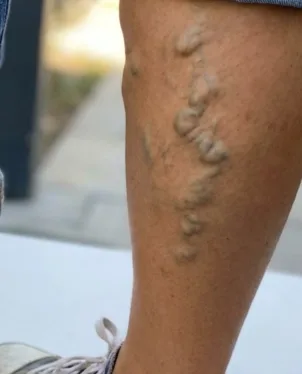
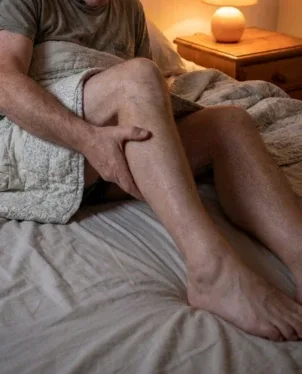
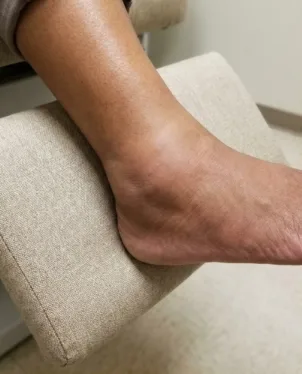
Varicose veins are enlarged, twisted veins, most often in the legs. They form when the one-way valves inside a vein weaken, so blood leaks backward and pools. They are common and not always harmful, but they can cause aching, swelling, and skin changes. A procedure can close or remove the vein.
- Done in the office, usually 30 to 45 minutes per leg
- Most people walk right after and return to normal activity the same day
- No referral needed, and same-week appointments are typically available
Facts to know
93%
of treated veins were still closed one year after radiofrequency ablation. Pooled analysis of 29 studies of the great saphenous vein
60–80%
of chronic leg ulcers are caused by vein disease. Published reviews of chronic venous disease
1–2%
of adults have a venous leg ulcer, rising to about 3% after age 65. StatPearls clinical summary
30–45 min
typical in-office time per leg for radiofrequency ablation. Dr. Rema Malik's clinic
How a leg vein works, and fails
Your leg veins carry blood up toward your heart, against gravity. Tiny one-way valves keep it from falling back. Switch the picture to compare.
The valve closes behind the blood, so every squeeze of your calf muscle sends it up and none falls back.
The valve no longer seals. Blood leaks backward and pools, the pressure stretches the vein wall, and the vein bulges under the skin.
What are varicose veins?
Varicose veins are enlarged, twisted veins, most often in the legs. They are often blue or purple, and they can look like ropes under the skin. They are common, and for many people they are mainly a nuisance. For others they cause pain, swelling, and skin changes that get in the way of daily life.
Why do varicose veins happen?
Your leg veins work against gravity. Every time you walk, the muscles in your calf squeeze the veins and push blood up toward your heart. One-way valves inside the vein open to let the blood through and close behind it, so it cannot fall back.
Varicose veins start when a valve weakens or is damaged. It stops closing tightly, and blood leaks backward. This leak is called reflux. The blood pools in the part of the vein below the valve, the pressure rises, and the vein wall stretches. A stretched vein bulges, and its other valves can no longer meet. The problem tends to spread down the leg over time.
Several things raise the chance of a weak valve:
- Family history. Varicose veins often run in families. You inherit the tendency toward weaker vein walls and valves.
- Age. Valves wear over the years.
- Being female. Women develop varicose veins more often than men. Hormones and pregnancy are part of the reason.
- Pregnancy. Blood volume and hormone levels rise, and the growing uterus presses on the veins in the pelvis.
- Standing or sitting for long hours. Without calf-muscle squeezes, blood has to fight gravity on its own.
- Extra body weight. More weight means more pressure on the leg veins.
- A past leg injury or blood clot. Either one can damage a valve.
You cannot change your genes or your age. Walking often, raising your legs, keeping a healthy weight, and not standing still for hours can lower the pressure on your veins and ease symptoms. They do not repair a valve that already leaks.
Are varicose veins only a cosmetic problem?
Sometimes they are. Many people just want to know whether the way their legs look is a sign of something more. But varicose veins can also be the visible part of venous reflux, which is a medical condition.
When reflux goes untreated for years, it can lead to leg swelling, skin darkening or hardening near the ankle, and in some people open sores that are slow to heal. A vein close to the skin can also become inflamed and painful. The point of an evaluation is to find out which of these situations you are in, so you are not guessing.
When should I see a vascular surgeon?
Consider a visit if:
- your legs ache or feel heavy at the end of the day,
- your ankles swell,
- the skin near your ankle has changed color or texture,
- a vein is painful, hard, or has bled, or
- your veins simply bother you and you want to know your options.
You do not need a referral, and you do not need to wait until the veins look severe.
Go to an emergency room today if one leg suddenly swells and hurts, or if a vein is bleeding and will not stop with firm pressure. Call 911 for chest pain or sudden trouble breathing.
How do we diagnose varicose veins?
Treatment depends on what is happening inside the vein, not only on how the vein looks. That is why we start with a duplex ultrasound, a scan that uses sound waves, with no needles and no radiation.
- You stand or sit while the technician scans your leg.
- The scan shows the vein walls and the blood moving through them.
- Gentle squeezes of the leg show which valves close and which let blood fall back.
- The result is a map of your veins, so treatment is aimed at the vein that is actually leaking.
Dr. Rema Malik reviews the images with you at the same visit. Many people have the scan the same day as the exam.
How do we treat varicose veins?
We start with the least treatment that will work. The plan depends on your symptoms, your ultrasound, and your goals.
Step one: self-care and compression. Walking, raising your legs, and wearing compression stockings ease aching and swelling for many people. These steps manage symptoms. They do not fix a leaking valve.
Step two: close or remove the vein. When a vein with reflux is causing symptoms, a procedure can close or remove it. Blood is then directed into healthier veins. Most of these procedures are done in the office with local anesthetic.
Radiofrequency ablation
A thin catheter heats the vein wall from the inside until it seals shut.
Often used for: larger, straighter veins with reflux
Typical time: about 30 to 45 minutes per leg
Sclerotherapy
A medicine is injected into the vein. The vein closes and fades.
Often used for: smaller varicose veins and spider veins
Typical time: about 15 to 30 minutes
Varithena foam
An injectable foam fills the vein under ultrasound and closes it.
Often used for: winding or hard-to-reach veins
Typical time: about 30 to 45 minutes
Microphlebectomy
Bulging surface veins are lifted out through tiny openings.
Often used for: visible branch veins, often with another procedure
Typical time: about 30 to 60 minutes
Many people have more than one of these over the course of care. Dr. Rema Malik recommends the combination that fits your veins. Read more on our pages for radiofrequency ablation, sclerotherapy, Varithena, and microphlebectomy.
In a published analysis of 29 studies, about 93 out of 100 treated great saphenous veins were still closed one year after radiofrequency ablation. Results vary from person to person, and new varicose veins can appear elsewhere over time.
What if I do not, or cannot, get treated?
Many people with varicose veins never need a procedure. If your veins do not hurt, your ultrasound shows only mild reflux, and your skin looks healthy, watching and self-care are reasonable choices. We will tell you honestly if that is you, and we will tell you which changes to watch for. The steps above show the changes doctors look for. Swelling that keeps coming back, skin that darkens or itches, and any sore that is slow to heal are the signs that waiting may no longer be the right plan.
Some people cannot have a vein procedure right away, or at all. Examples include:
- Pregnancy. Treatment is usually postponed until after delivery. Compression and leg elevation are used meanwhile.
- A recent blood clot in a deep vein. The clot is treated first.
- Poor blood flow in the leg arteries. Compression can be unsafe, and artery flow is checked first.
- A health condition that makes a procedure unsafe for now. Dr. Rema Malik will discuss the risks and the safest timing.
If you cannot be treated, or you choose not to be, there is still a plan. Compression stockings, regular walking, leg elevation, weight control, skin care, and regular check-ups can keep symptoms in check. Treatment can be reconsidered at any time, and a changed situation, such as the end of a pregnancy, often reopens the door.
What is recovery like?
Most patients walk right after an in-office procedure and return to normal daily activity quickly. You may be asked to wear a compression stocking for a period of time and to avoid hard exercise for a short while. You will get written instructions that fit the procedure you have.
Mild bruising, tightness, or tenderness along the treated vein is common and settles over time. Call us if a leg suddenly swells or becomes very painful.
Myths and facts
| Myth | Fact |
|---|---|
| Crossing your legs causes varicose veins. | It does not. Long hours sitting or standing, without moving, can raise pressure in your veins. |
| Varicose veins are only a cosmetic problem. | Often, but not always. They can come with aching, swelling, and skin changes, and untreated reflux can lead to sores. |
| Treatment means painful surgery and a long recovery. | Most treatment today is done in the office with local anesthetic, and many people walk out the same day. |
| Once treated, the veins never come back. | The treated vein stays closed. New varicose veins can still form over time, because the tendency toward weak valves remains. |
| Compression stockings cure varicose veins. | They ease symptoms but do not repair a leaking valve. |
Does insurance cover varicose vein treatment?
Many plans cover treatment when symptoms are documented and the ultrasound shows reflux. Some plans ask you to try compression stockings first. Plans differ, so our team checks your coverage before you schedule a procedure.
Treatment for looks alone is usually not covered.
What happens at the first visit?
You talk with Dr. Rema Malik about your symptoms and your history, and she examines your legs. If it helps, you have a duplex ultrasound at the clinic the same day. You leave with a plan, whether that is self-care, a procedure, or both. You do not need a referral. Use the form at the bottom of this page, or call us.
What happens if it is not treated?
Not everyone moves through every step, and many people stay at the first one for years. These are the changes doctors watch for.
Tired, heavy legs
Aching or heaviness that is worse by evening. Visible bulging veins. Many people stay here for years.
Swelling
Ankles swell by the end of the day. Cramps at night. Socks leave deep marks.
Skin changes
Skin near the ankle darkens, itches, dries out, or feels tight. The vein pressure is now affecting the skin.
Open sore
A sore that is slow to heal, called a venous ulcer. It can take months and often returns unless the vein is treated.
Treating the vein early can stop the later steps. If you notice a step you are on, an ultrasound shows what is really happening.
Signs you may have it
Where you may notice the signs
Choose a sign to see where it shows up on the leg.
Raised, twisted veins you can see and feel under the skin.
Tired, throbbing legs, often worse by evening and at night.
Puffiness by the end of the day. Socks leave deep marks.
Darker, itchy, dry, or tight skin where the vein pressure is highest.
Bulging, rope-like veins
Raised, twisted veins you can see and feel under the skin.
Aching, heavy legs
Tired, throbbing legs, often worse by evening and at night.
Swollen ankles
Puffiness by the end of the day. Socks leave deep marks.
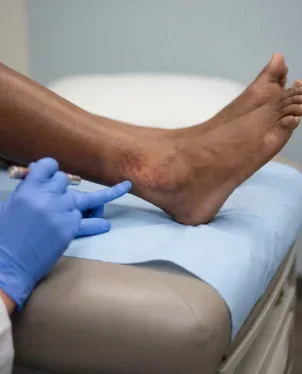
Skin changes near the ankle
Darker, itchy, dry, or tight skin where the vein pressure is highest.
- Bulging, rope-like veins visible under the skin
- Aching, heaviness, or throbbing in the legs by end of day
- Swelling around the ankles
- Itching or burning skin over the vein
- Leg cramps, especially at night
- Darkened or hardened skin near the ankle
How we diagnose it
- On-site duplex ultrasound to map vein reflux and valve function
- No referral needed. Same-week appointments are typically available
- Imaging reviewed with you during the same visit
Treatments in detail
Related conditions
Sources and further reading
These sources support the figures on this page. Your own numbers can differ, and only an exam and an ultrasound can tell you where you stand.
Frequently asked questions
Still have a question?
Our team answers the phone Monday to Friday, 8 AM to 5 PM.
Can varicose veins be removed?
Yes. When a vein with reflux is causing symptoms, a procedure can close it or remove it. Radiofrequency ablation and sclerotherapy close the vein, and microphlebectomy removes bulging surface veins through tiny openings. Dr. Rema Malik recommends the option that fits your ultrasound.
Is varicose vein treatment painful?
Most patients report mild discomfort during the in-office procedure, managed with local anesthesia. Recovery is typically quick, with most people returning to normal activity the same day.
Will insurance cover varicose vein treatment?
Many insurance plans cover treatment when symptoms such as pain, swelling, or skin changes are documented. Plans differ, so our team checks your coverage before your procedure.
How long does radiofrequency ablation take?
The in-office procedure typically takes about 30 to 45 minutes per leg.
Can varicose veins come back after treatment?
Treatment closes or removes the vein that was treated, so that vein does not come back. New varicose veins can develop over time, because the underlying tendency toward weak valves remains. Your plan includes what to watch for.
Do compression stockings cure varicose veins?
No. Compression stockings can ease aching and swelling, and they are often a first step. They do not repair a leaking valve. If symptoms continue, an ultrasound shows whether a procedure would help.
Can I just leave varicose veins alone?
Often, yes, if they do not hurt and an ultrasound shows no serious reflux. Veins that cause swelling, skin changes, or sores are different, because the pressure keeps building. A visit tells you which group you are in.
Do I need a referral?
No. You can call and schedule a visit directly.
Not ready to book? Get the monthly newsletter.
Plain-language vein and vascular guidance from Dr. Malik, once a month.
Ready to talk to Dr. Rema Malik?
Tell us how to reach you. A team member calls to find a time that works. No referral needed.
- Same-week appointments are typically available
- On-site ultrasound, so you can leave with answers
- Most insurance accepted. Our team checks coverage first
Request an appointment
Takes about a minute. We call you back.