Spider Vein Removal in Sugar Land, TX
Fine red and blue vessels treated with sclerotherapy, a quick in-office injection procedure.
Quick answer
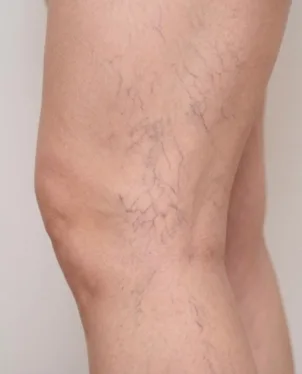
Spider veins are tiny red, blue, or purple blood vessels near the skin, usually under 1 millimeter wide. They are very common and often only a cosmetic concern, but they can ache or burn, and sometimes a larger leaking vein sits underneath. Sclerotherapy, a short in-office injection, closes them.
- Treated in the office, usually 15 to 30 minutes
- Many people need more than one session, several weeks apart
- No referral needed, and same-week appointments are typically available
Facts to know
88%
of women, and 79% of men, in a random sample of Edinburgh adults had spider veins in a leg. Edinburgh Vein Study, population survey
Under 1 mm
is the width of a true spider vein, thinner than a pencil lead. Standard vein size grading
15–30 min
typical in-office time for a sclerotherapy session. Dr. Rema Malik's clinic
2 or more
sessions are common, spaced several weeks apart. Dr. Rema Malik's clinic
How big is a spider vein?
Leg veins come in three sizes, and each sits at a different depth. Pick one to compare. The deeper vein at the bottom is the one doctors check with ultrasound.
Under 1 mm
Hair-thin red, blue, or purple lines that sit in the skin. They are flat and usually cause no symptoms, though some people feel burning or itching.
1 to 3 mm
Blue-green veins just under the skin. They are larger than spider veins and can feed them. They may be a little raised.
3 mm or more
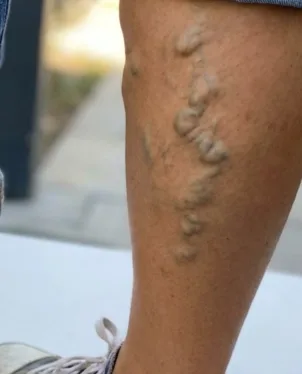
Bulging, twisted veins you can feel. They come from weak valves, and they are the ones most likely to cause aching, swelling, and skin changes.
What are spider veins?
Spider veins are small, visible blood vessels near the surface of the skin. They are usually red, blue, or purple, and they often form a web-like or branching pattern on the legs. They are smaller than varicose veins and usually lie flat against the skin.
They are very common. In one large survey of adults in Edinburgh, most of the women and men examined had at least a few on one leg. For many people they are mainly a cosmetic concern. For others, they come with aching or burning, and they can be a sign of a vein problem deeper in the leg.
Why do spider veins happen?
Your leg veins carry blood up toward your heart. One-way valves keep it from falling back. Spider veins form when the tiny veins under the skin widen and stay widened. Sometimes the cause is the small vein itself. Sometimes the pressure comes from a larger vein below, whose valve leaks and pushes blood back up into the small ones.
Several things make this more likely:
- Family history. Spider veins and varicose veins often run in families.
- Hormones. Pregnancy, birth control pills, and hormone treatment can widen small veins. Women get spider veins more often than men.
- Age. Veins lose some of their tone over the years.
- Long periods of standing or sitting. Blood pools in the legs when the calf muscles are not moving.
- A past injury to the leg. A bruise or surgery can leave small veins behind.
- Sun exposure. Mostly for spider veins on the face.
Often more than one of these is at work. You cannot change your genes or your age. Walking often, raising your legs, moving during long sitting, and using sunscreen on your face may slow new ones.
Are spider veins cosmetic or medical?
Both are possible, and it is worth finding out which applies to you. If your spider veins do not hurt and you have no swelling or heaviness, they are most likely cosmetic. If your legs also ache, swell, or feel heavy, or if you can see larger bulging veins nearby, a leaking valve in a deeper vein may be feeding the spider veins.
In that case, treating only the tiny veins on the surface may give a short-lived result. An ultrasound shows what is going on underneath, so treatment is aimed at the cause.
When should I see a vascular surgeon?
Consider a visit if:
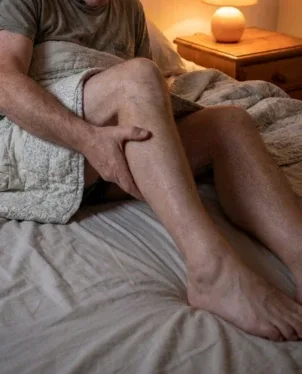
- your spider veins ache, burn, or itch,
- your legs feel heavy or swell by evening,
- you can see bulging veins near the spider veins,
- the skin near your ankle has changed color, or
- you simply want to know your options.
You do not need a referral.
Go to an emergency room today if one leg suddenly swells and hurts. Call 911 for chest pain or sudden trouble breathing.
How are spider veins treated?
The standard treatment is sclerotherapy. A small needle places a solution into the tiny veins. The solution irritates the inside of the vein so that it closes, and the body gradually clears it over several weeks.
Sclerotherapy is done in the office and takes a short time. You can walk right afterward. When there is an underlying problem with a larger vein, that vein may be treated first, with a procedure such as radiofrequency ablation, so the spider veins are less likely to return.
Read more on our sclerotherapy page.
What if I do not, or cannot, get treated?
Spider veins are not dangerous on their own. If they do not bother you, leaving them alone is a reasonable choice, and we will say so. Keep an eye out for aching, burning, swelling, or skin changes, because those can mean a deeper vein needs attention.
Sclerotherapy is not right for everyone, or not right now. Examples include:
- Pregnancy. Treatment is usually postponed until after delivery and breastfeeding. Compression and walking ease symptoms meanwhile.
- A recent blood clot in a leg vein. The clot is treated first.
- A past allergic reaction to the injection medicine. Dr. Rema Malik will discuss other options.
- Trouble walking after the procedure. Walking is part of the aftercare.
If you cannot be treated, or you choose not to be, there are still ways to cope. Compression stockings, regular walking, raising your legs, and skin care can ease aching. Concealing makeup is a personal choice for appearance. Treatment can be reconsidered at any time.
What can I expect after treatment?
Mild bruising, small red bumps, or tenderness where the injections were placed are common and fade. Some people notice temporary skin darkening along a treated vein. Your care team will give you written instructions about activity and any compression stockings.
Results build over weeks, not days. Many patients need more than one session. Call us if a leg suddenly swells or becomes very painful.
Myths and facts
| Myth | Fact |
|---|---|
| Spider veins are always only cosmetic. | Often, but not always. They can come with aching, and they can sit on top of a leaking deeper vein. |
| Crossing your legs causes spider veins. | It does not. Family history and hormones matter more. |
| Treatment is painful and has a long recovery. | Most people feel a brief sting and walk out right away. |
| Once treated, spider veins never come back. | Treated veins fade. New ones can appear over time, because the tendency stays. |
| Creams can make spider veins disappear. | Creams do not close a vein. |
Does insurance cover spider vein treatment?
Treatment done only to improve appearance is usually not covered by insurance. If your symptoms and an ultrasound point to an underlying vein condition, some plans may cover part of your care. After your visit, our team can explain what is likely to be covered and what is not.
What happens at the first visit?
You talk with Dr. Rema Malik about your symptoms and your goals, and she examines your legs. If your history suggests a vein problem beneath the surface, you can have a duplex ultrasound at the clinic the same day. You leave knowing what type of spider veins you have and what your options are. You do not need a referral. Use the form at the bottom of this page, or call us.
What happens if spider veins are left alone?
Most spider veins stay harmless, and many people choose not to treat them. These are the steps to watch for, so you know when a visit makes sense.
They stay as they are
Many spider veins never hurt and never change. Looking at them is the only effect.
More appear
New spider veins can show up over time. The tendency runs in families and with age.
Aching or burning
Heaviness, itching, or burning by evening. This is when a closer look helps.
A deeper vein is leaking
Swelling, bulging veins, or skin changes. A deeper valve may be feeding the small veins.
Spider veins alone are rarely dangerous. An ultrasound checks the deeper vein, so you know whether treating the surface veins is enough.
Signs you may have it
Fine, web-like lines
Red, blue, or purple lines in the skin, often on the thighs, calves, or ankles.
Aching or burning
Some people feel heaviness, burning, or itching over the veins, often by evening.
Larger veins nearby
Bulging veins close to spider veins can mean a leaking valve underneath.
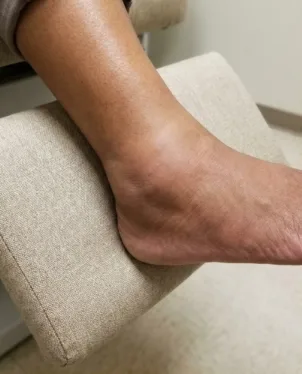
Swelling with them
Swollen ankles together with spider veins are a reason to get an ultrasound.
- Fine, web-like red, blue, or purple lines near the skin surface
- Mild aching, burning, or itching over the affected area
- Clusters of tiny veins on the thighs, calves, or ankles
- A concern about how visible veins look on your legs
How we diagnose it
- A visual exam of both legs
- Duplex ultrasound when symptoms suggest a larger vein problem underneath
- No referral needed. Same-week appointments are typically available
Treatments in detail
Related conditions
Sources and further reading
These sources support the figures on this page. Your own numbers can differ, and only an exam and an ultrasound can tell you where you stand.
Frequently asked questions
Still have a question?
Our team answers the phone Monday to Friday, 8 AM to 5 PM.
Is sclerotherapy painful?
Most patients describe a brief stinging or cramping feeling during the injections. The procedure is done in the office, and numbing medicine is not usually needed.
How many sessions are needed?
Many patients need more than one session, spaced several weeks apart. The number depends on how many veins are treated and how they respond.
Are spider veins a sign of a bigger problem?
Sometimes. Spider veins can be purely cosmetic, or they can sit on top of a larger vein with reflux. That is why we check with duplex ultrasound when you also have aching, swelling, or heaviness.
Do spider veins come back?
Treated veins fade, but new spider veins can appear over time. Your tendency to develop them does not go away with treatment.
Are spider veins dangerous?
By themselves, rarely. They become a medical question when they come with aching, swelling, skin changes, or bulging veins. An ultrasound shows whether a deeper vein needs care.
Do creams or laser treatments work instead?
Creams do not close a vein. Some people use other methods for very fine surface veins. For most leg spider veins, sclerotherapy is the standard in-office treatment, and Dr. Rema Malik will go over your options at your visit.
Will insurance pay for spider vein treatment?
Treatment done only for appearance is usually not covered. If your veins cause symptoms or come from an underlying vein condition, coverage may be possible. We can explain what to expect after your visit.
Can I exercise after treatment?
Walking is encouraged. Our team will tell you when to return to harder exercise and how long to wear compression stockings, if they are recommended.
Not ready to book? Get the monthly newsletter.
Plain-language vein and vascular guidance from Dr. Malik, once a month.
Ready to talk to Dr. Rema Malik?
Tell us how to reach you. A team member calls to find a time that works. No referral needed.
- Same-week appointments are typically available
- On-site ultrasound, so you can leave with answers
- Most insurance accepted. Our team checks coverage first
Request an appointment
Takes about a minute. We call you back.