Sclerotherapy in Sugar Land, TX
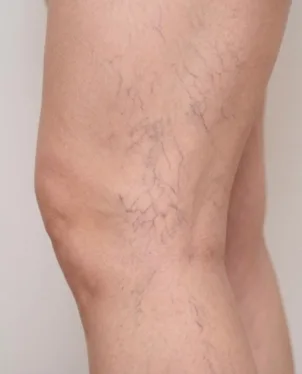
A quick in-office injection that closes small veins, used for spider veins and smaller varicose veins.
At a glance
- Typical time
- About 15 to 30 minutes
- Downtime
- Most people return to normal activity the same day
- Anesthesia
- Usually none needed
What is sclerotherapy?
Sclerotherapy is a procedure in which a medicine, called a sclerosant, is injected into a vein with a very fine needle. The medicine irritates the inside of the vein, so the walls stick together and the vein closes. Over several weeks, the body absorbs the closed vein, and it fades from view.
It is the standard in-office treatment for spider veins and for many smaller varicose veins.
Who is it for?
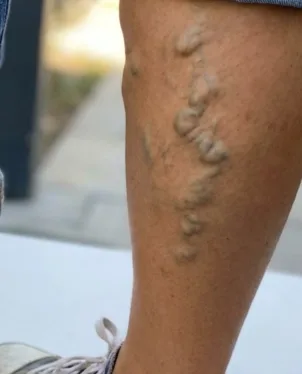
Sclerotherapy may be a good fit if you have spider veins or small varicose veins that bother you because of how they look or how they feel. It is often combined with other care. If a larger vein with reflux is feeding the small veins, that vein may need treatment first, for example with radiofrequency ablation, so the small veins do not keep coming back.
Dr. Rema Malik will examine your legs, and may use ultrasound, to decide which approach fits.
How does the procedure work?
- Review and marking. Your legs are examined, and the veins to be treated are identified.
- Injections. Using a very fine needle, Dr. Rema Malik injects the solution into each targeted vein. For veins below the skin surface, ultrasound may guide the needle.
- Compression. After the injections, the legs are covered with a compression wrap or stocking.
- Walking. You are encouraged to walk right afterward.
What does it feel like?
Most people feel a brief sting or a cramping sensation when the solution goes in. Numbing medicine is not usually needed. Sessions are short.
What can I expect afterward?
Mild bruising, small raised red areas, itching, or tenderness at the injection sites are common and settle. Some people have temporary skin darkening along a treated vein. You may be asked to wear compression stockings for a period of time and to avoid hard exercise briefly. You will get written instructions.
Results appear gradually. Many patients need more than one session, spaced several weeks apart.
What are the risks?
Sclerotherapy is a common procedure, and serious problems are uncommon, but there are risks. They include:
- Bruising, itching, or soreness
- Skin darkening, or tiny new red vessels near the treated area
- Inflammation of a vein
- A small skin sore at the injection site
- Rarely, an allergic reaction or a blood clot
Dr. Rema Malik will go through these with you before treatment.
After a procedure, go to an emergency room today if a leg suddenly swells or becomes painful. Call 911 for chest pain or sudden trouble breathing. These can be signs of a blood clot.
How is it different from other options?
- Radiofrequency ablation uses a catheter and heat, and suits larger veins. See our radiofrequency ablation page.
- Varithena foam is an injectable foam used for some larger or winding veins. See our Varithena page.
- Microphlebectomy removes bulging surface veins through tiny openings.
What happens before you decide?
You start with a visit and an exam, and an ultrasound if it helps. You leave knowing which treatment, if any, fits your veins. You do not need a referral.
Conditions this treats
Frequently asked questions
Still have a question?
Our team answers the phone Monday to Friday, 8 AM to 5 PM.
Is sclerotherapy painful?
Most patients describe a brief stinging or cramping feeling during the injections. Numbing medicine is not usually needed. The procedure is short.
How many sessions will I need?
Many patients need more than one session, spaced several weeks apart. The number depends on how many veins are treated and how they respond.
How long until I see results?
Treated veins fade gradually over several weeks. Larger veins can take longer.
Can I walk and exercise afterward?
Walking is encouraged. Our team will tell you when to return to harder exercise and whether to wear compression stockings.
What are the side effects?
Common effects are bruising, small red bumps, itching, or tenderness at the injection sites. Some people see temporary darkening of the skin along a treated vein. Rare problems include allergic reaction, inflammation of a vein, and a blood clot.
Does insurance cover sclerotherapy?
Treatment done only for appearance is usually not covered. If your veins cause symptoms or come from an underlying vein problem, coverage may be possible. We can explain what to expect after your visit.
Not ready to book? Get the monthly newsletter.
Plain-language vein and vascular guidance from Dr. Malik, once a month.
Ready to talk to a vascular surgeon?
Same-week appointments. No referral needed. Most insurance accepted.