Vascular Ultrasound in Sugar Land, TX
A scan with no needles that shows your veins and arteries at work, so treatment is aimed at the real cause.

At a glance
- Typical time
- About 30 to 45 minutes, depending on what is checked
- Downtime
- None. You go back to normal activity right after
- Anesthesia
- None needed
Quick answer
A vascular ultrasound uses sound waves and a small handheld probe to make live pictures of your veins and arteries. It shows leaking valves, blood clots, and narrowed arteries. There are no needles and no radiation. Dr. Rema Malik's clinic can usually do it during your visit.
- No needles, no radiation
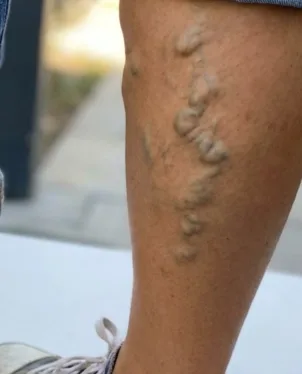
- Shows leaking veins, clots, and narrowed arteries
- Often done the same day as your visit
What is a vascular ultrasound?
A vascular ultrasound uses sound waves to make live pictures of blood vessels. A technologist or doctor moves a small probe over your skin with a gel. The image shows the walls of your veins and arteries, and the blood moving inside them. There are no needles and no radiation.
What does it show?
- Vein reflux. Valves that leak, and which veins are affected. This guides vein treatment such as radiofrequency ablation.
- Blood clots. A clot in a deep leg vein. See DVT.
- Narrowed arteries. Reduced blood flow in the legs, as in peripheral artery disease.
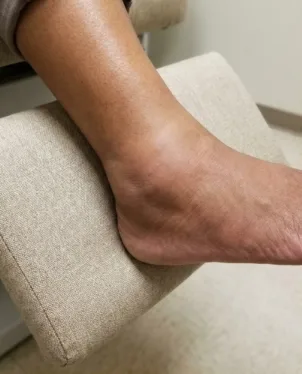
- Other causes of leg pain or swelling.
Who is it for?
An ultrasound may be useful if you have swollen, aching, or heavy legs, visible varicose veins, leg pain when walking, a sore that is slow to heal, cold or pale feet, or a past blood clot. It is often the first test Dr. Rema Malik uses to decide on treatment.
How does the test work?
- Position. You lie down or stand, depending on which veins are checked.
- Gel and probe. Gel is spread on the skin. The probe moves along your leg.
- Images. The screen shows the vessels and blood flow. Some tests squeeze the calf to see how the valves respond.
- Blood pressure cuffs. For arteries, small cuffs on the arm and ankle may measure the ankle-brachial index.
- Results. Dr. Rema Malik reviews the pictures with you at the same visit.
What does it feel like?
Light pressure from the probe, and cool gel. There is no pain and no recovery time.
What can I expect afterward?
You can drive, work, and exercise as usual. Your plan comes from the results, which may include no treatment, compression, a vein procedure, or tests for arteries.
What are the risks?
None are known from the sound waves. A scan does not use radiation. If it finds a clot, we start care right away.
Go to an emergency room today if one leg suddenly swells or hurts. Call 911 for chest pain or sudden trouble breathing.
How is it different from other tests?
- CT and MRI can image vessels but may need contrast dye or take place at a hospital.
- Venography places dye in the veins through a needle.
- Ultrasound is done in the office, shows blood flow live, and is usually the first test.
What happens before you decide?
You start with a visit and an exam, and an ultrasound if it helps. You leave knowing what the test found and what your options are. You do not need a referral.
Conditions this treats
Frequently asked questions
Still have a question?
Our team answers the phone Monday to Friday, 8 AM to 5 PM.
Does a vascular ultrasound hurt?
No. A gel and a small probe are moved over your skin. You may feel light pressure. There are no needles.
What is a duplex ultrasound?
It combines a picture of the vein or artery with a measure of blood flow. It shows both the shape of the vessel and which way the blood moves.
What is an ankle-brachial index?
It compares blood pressure at your ankle with the arm. A low number can point to narrowed leg arteries, as in peripheral artery disease.
Do I need to prepare?
Usually not. Wear loose clothing that lets your legs be examined. Tell the team about any medicines and health conditions.
Do I need a referral?
No. You can call and schedule a visit directly.
Will insurance cover it?
Many plans cover an ultrasound when you have symptoms. Coverage differs by plan. We can explain what to expect after your visit.
Not ready to book? Get the monthly newsletter.
Plain-language vein and vascular guidance from Dr. Malik, once a month.
Ready to talk to a vascular surgeon?
Same-week appointments. No referral needed. Most insurance accepted.