
Leg Swelling Evaluation in Sugar Land, TX
Swollen legs and ankles have many causes. A vascular exam and ultrasound show whether your veins are one of them.
Quick answer
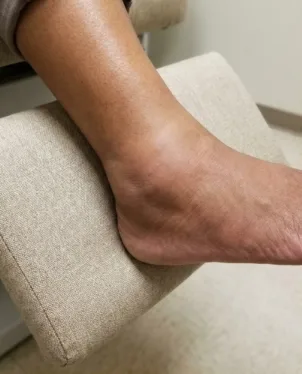
Leg swelling, also called edema, is extra fluid in the legs, ankles, or feet. Common causes include leaking leg veins, a past blood clot, medicines, and heart, kidney, or liver problems. Swelling in only one leg that starts suddenly, with pain or warmth, can be a blood clot and needs emergency care today.
- Both legs swollen by evening often points to the veins
- One leg suddenly swollen, painful, or warm is an emergency
- An on-site ultrasound can check the leg veins in one visit
What is leg swelling?
Leg swelling, called edema, is extra fluid that collects in the legs, ankles, or feet. It can be mild and come and go, or it can be constant. Sometimes it is harmless. Sometimes it is the first sign of a vein, heart, kidney, or liver problem.
Why does it happen?
Your leg veins carry blood up to the heart against gravity. One-way valves keep it from falling back. Swelling can come from several causes:
- Leaking leg veins. When valves weaken, blood and fluid pool in the lower leg. This is called chronic venous insufficiency.
- A blood clot. A clot in a deep leg vein blocks flow and can swell the leg quickly, often on one side.
- Medicines. Some blood pressure, hormone, and anti-inflammatory medicines cause swelling.
- Pregnancy. More blood volume and pressure from the baby affect the veins.
- Long sitting or standing. The calf muscles pump less.
- Other health conditions. Heart, kidney, and liver disease can cause swelling in both legs.
When is it a vein problem?
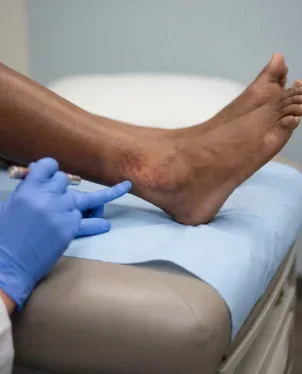
Vein swelling is usually in both legs, often more in one. It builds through the day, eases overnight, and comes with heaviness, aching, or visible veins. Skin near the ankle may darken or itch. An ultrasound shows leaking valves directly, even when no veins are visible.
When should I see a vascular surgeon?
Make an appointment if:
- swelling comes back day after day,
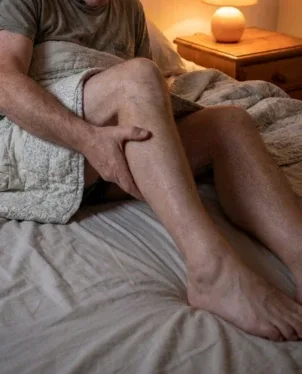
- your legs feel heavy or ache by evening,
- the skin near your ankle has changed, or
- compression stockings are not enough.
You do not need a referral.
Go to an emergency room today if one leg suddenly swells, hurts, or turns warm or red. Call 911 for chest pain or sudden trouble breathing.
How is leg swelling evaluated and treated?
The first step is finding the cause. Dr. Rema Malik examines your legs and uses an on-site duplex ultrasound to check for leaking veins and clots.
- If the veins are the cause, care may include compression therapy, walking, raising your legs, and closing a leaking vein with a procedure such as radiofrequency ablation.
- If a clot is found, you start clot care right away. See our page on deep vein thrombosis.
- If the cause is not in the veins, we tell you, and suggest you follow up with your primary care doctor.
What if I do not, or cannot, get it checked?
Swelling from a vein problem rarely goes away on its own. Over time, it can lead to skin changes and open sores. Swelling from a clot can become dangerous if the clot travels to the lungs.
If you cannot have a vein procedure, you can still ease swelling with daily walking, raising your legs, compression stockings that fit well, and skin care. Compression is not safe for everyone, so ask first if you have poor circulation in your legs.
What can I expect after treatment?
Most vein procedures are done in the office, and you can walk right after. Swelling and heaviness often improve over the weeks that follow. Your care team gives written instructions. Call us if a leg suddenly swells or becomes very painful.
Myths and facts
| Myth | Fact |
|---|---|
| Swollen legs are just part of getting older. | Common with age, but often with a treatable cause. |
| Cutting back on water helps. | It does not. Veins and other causes matter more. |
| Swelling in one leg is nothing to worry about. | Sudden one-leg swelling can be a clot. Get care today. |
| Compression fixes the cause. | It eases swelling. It does not repair a leaking vein. |
Does insurance cover a swelling evaluation?
When swelling comes with symptoms, many plans cover an exam and ultrasound. Coverage differs by plan. After your visit, our team can explain what is likely to be covered.
What happens at the first visit?
You talk with Dr. Rema Malik about your swelling, your medicines, and your health. She examines your legs, and an ultrasound can usually be done at the clinic the same day. You leave knowing what is causing the swelling and what your options are. Use the form at the bottom of this page, or call us.
What happens if leg swelling is not looked into?
Swelling that comes back day after day is a signal. These are the steps it can follow when a vein problem is the cause.
Evening puffiness
Ankles swell by the end of the day and ease overnight.
Daily swelling
Swelling returns every day. Legs feel heavy. Cramps at night.
Skin changes
Skin near the ankle darkens, itches, dries, or tightens.
Open sore
A venous ulcer that heals slowly and often returns.
Not all swelling comes from the veins. Heart, kidney, liver, and medicine causes need your primary care doctor. We will tell you if we think that is the case.
Signs you may have it
Puffy ankles by evening
Socks leave deep marks. Shoes feel tight later in the day.
Heavy, tired legs
A full, aching feeling that eases when you lie down and raise your legs.
Skin changes
Darker, itchy, dry, or tight skin around the ankle.
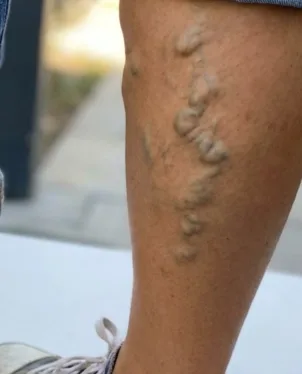
Visible veins
Bulging veins with swelling can mean leaking valves.
- Swollen ankles, feet, or lower legs, often worse by evening
- Swelling that eases after a night lying down
- Heavy, tight, or aching legs
- Skin changes or itching around the ankle
- Visible varicose veins along with swelling
How we diagnose it
- A leg exam, including the skin, pulses, and veins
- On-site duplex ultrasound to check for leaking veins or a clot
- Review of your medicines and health history
- No referral needed. Same-week appointments are typically available
Treatments in detail
Related conditions
Sources and further reading
These sources support the figures on this page. Your own numbers can differ, and only an exam and an ultrasound can tell you where you stand.
Frequently asked questions
Still have a question?
Our team answers the phone Monday to Friday, 8 AM to 5 PM.
Why are my legs swollen at the end of the day?
Gravity pulls blood and fluid down. Healthy leg veins push it back up. When the valves leak, fluid builds up in the ankles and lower legs, and it often eases overnight.
When is leg swelling an emergency?
If one leg suddenly swells, especially with pain, warmth, or redness, go to an emergency room today. It can be a blood clot. Call 911 for chest pain, sudden trouble breathing, or coughing up blood.
Is leg swelling always a vein problem?
No. Heart, kidney, and liver conditions, some medicines, and low activity can also cause it. A vascular exam and ultrasound show whether the veins are involved.
Will compression stockings help?
They often ease swelling and heaviness. They do not repair a leaking vein. Dr. Rema Malik will tell you whether stockings are safe for you, because they need healthy arterial blood flow.
Do I need a referral?
No. You can call and schedule a visit directly.
Not ready to book? Get the monthly newsletter.
Plain-language vein and vascular guidance from Dr. Malik, once a month.
Ready to talk to Dr. Rema Malik?
Tell us how to reach you. A team member calls to find a time that works. No referral needed.
- Same-week appointments are typically available
- On-site ultrasound, so you can leave with answers
- Most insurance accepted. Our team checks coverage first
Request an appointment
Takes about a minute. We call you back.