
Carotid Artery Disease Treatment in Sugar Land, TX
Plaque in the arteries of your neck can raise the risk of a stroke. Here is how it is found, how it is treated, and which signs mean you need help right away.
Quick answer
Carotid artery disease means plaque has narrowed the two main arteries in your neck that carry blood to your brain. It often causes no symptoms until a TIA or a stroke. It is found with a simple ultrasound and treated with medicine, healthy habits, and for some people a procedure. Stroke signs need 911.
- Carotid duplex ultrasound uses sound waves, with no needles and no radiation
- Many people are treated with medicine and regular ultrasound checks
- No referral needed for a visit. Stroke signs mean call 911, not book a visit
Facts to know
795,000
people in the United States have a stroke every year. CDC, Stroke Facts and Statistics
87%
of strokes are ischemic, caused by blocked blood flow to the brain. CDC, Stroke Facts and Statistics
Every 40 sec
someone in the United States has a stroke. CDC, Stroke Facts and Statistics
Over 1 in 3
people who have an untreated TIA have a major stroke within a year. CDC, About Stroke
What is carotid artery disease?
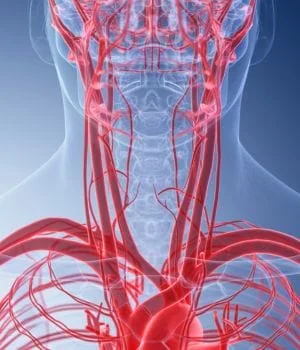
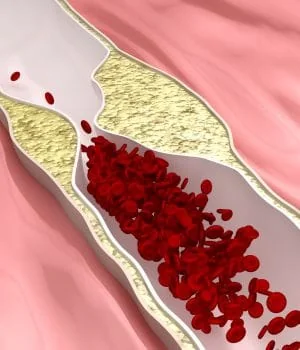
Carotid artery disease means plaque, made of fat, cholesterol, and other material, has built up inside the carotid arteries in your neck. These arteries carry blood to your brain. As the plaque grows, the artery narrows. A piece of plaque can also break off and travel to the brain, which can cause a stroke.
Why does it happen?
Plaque forms slowly, over years, when the lining of an artery is damaged and fat and cholesterol collect there. The risk is higher if you have:
- High blood pressure. It wears on the artery wall.
- High cholesterol. More fat is available to build plaque.
- Diabetes. High blood sugar harms artery linings.
- A history of smoking. Smoking damages arteries and speeds plaque.
- Age and family history. Both raise the risk.
- Other artery disease. Having peripheral artery disease in the legs is a sign that other arteries may be affected too.
You cannot change your age or family history. Blood pressure, cholesterol, blood sugar, and smoking can all be worked on, with your doctor.
What are the warning signs?
Many people have no signs until a stroke or a TIA. The warning signs are sudden and need emergency care:
- Face drooping on one side
- Arm or leg weakness or numbness, usually on one side
- Speech that is slurred or hard to understand
- Time: call 911 right away
A short loss of vision in one eye can also be a warning. Do not wait to see whether the signs pass, and do not drive yourself.
How is it found?
A carotid duplex ultrasound is the usual first test. It uses sound waves, no needles, and no radiation, to show how narrow the artery is and how fast blood is moving. If your doctor needs more detail, a CT or MR scan of the arteries may follow.
When should I see a vascular surgeon?
See a surgeon if:
- a test has shown narrowing in your neck arteries,
- you have had a TIA,
- your doctor heard a sound over your neck artery, or
- you have several risk factors and want to know where you stand.
You do not need a referral. Call us at the number on this page to request a visit.
Call 911 for stroke signs. Do not book a visit instead.
How is it treated?
Treatment has two parts.
- Lowering your risk. This means medicine to lower cholesterol and blood pressure, often a medicine that helps prevent clots, and changes you make yourself: not smoking, regular activity, and good control of blood sugar.
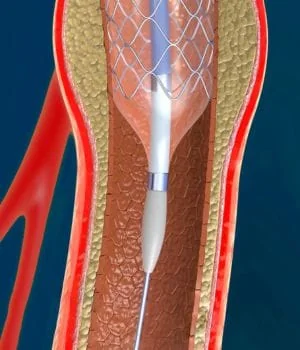
- Opening the artery, when needed. Some people benefit from a procedure. In a carotid endarterectomy, plaque is removed through an incision in the neck. In stenting approaches, a stent is placed to hold the artery open. Dr. Rema Malik, a vascular surgeon, performs these procedures and will explain which one fits you.
Whether you need a procedure depends on how narrow the artery is, whether you have had symptoms, and your overall health. Many people with mild narrowing are treated with medicine and regular ultrasound checks.
What are the risks?
Every procedure has risks. They can include bleeding, infection, nerve irritation in the neck, and, rarely, a stroke or heart problem during or after the procedure. Dr. Rema Malik will go over the risks and benefits for you before you decide.
What if I do not, or cannot, get treated?
Carotid artery disease does not go away on its own. Plaque can keep growing, and a TIA or stroke can be the first sign. Medicine and healthy habits lower the risk, even when no procedure is planned.
Some people are not good candidates for a procedure, because of other serious health problems or the way the artery is shaped. Others choose not to have one. In those cases, care focuses on medicine, blood pressure, cholesterol, and blood sugar, not smoking, and regular ultrasound checks. Dr. Rema Malik will go over what fits your health. You can reconsider a procedure at any time.
What can I expect after treatment?
After a procedure, you are watched closely and given written instructions. Many people feel soreness or tightness in the neck for a time. Your care team will tell you when to return to normal activity. You will continue medicine and ultrasound checks, because the disease can return or affect other arteries. Call 911 for any stroke sign.
Myths and facts
| Myth | Fact |
|---|---|
| If I feel fine, my neck arteries are fine. | Many people have no symptoms until a TIA or a stroke. |
| A TIA is harmless because it goes away. | It is a warning. Call 911 even if the symptoms stop. |
| Narrowing always means surgery. | Many people are treated with medicine and checks. A procedure is for selected people. |
| An ultrasound is risky or painful. | It uses sound waves, with no needles and no radiation. |
| Only older people need to think about it. | Age matters, but blood pressure, diabetes, cholesterol, and smoking matter too. |
Does insurance cover carotid care?
Many plans cover ultrasound and treatment when you have symptoms or a known narrowing. Coverage for screening without symptoms varies by plan. After your visit, our team can explain what is likely to be covered and what is not.
What happens at the first visit?
You talk with Dr. Rema Malik about your health, your risk factors, your medicines, and any warning episodes you have had. She examines you and, when needed, a carotid ultrasound can look at your neck arteries. You leave with a plan to lower your stroke risk and, when it helps, a recommendation about a procedure. Use the form at the bottom of this page, or call us. Call 911 for stroke signs.
What happens if carotid artery disease is not treated?
The narrowing usually builds quietly. These are the steps it can follow, so you know why checking risk early matters.
Plaque builds
Fat and cholesterol collect in the neck artery. There are usually no signs at this stage.
The artery narrows
Less blood reaches the brain. Many people still feel nothing, and a doctor may hear a sound over the artery.
A warning episode
A short spell of weakness, trouble speaking, or loss of vision in one eye. This is a TIA and needs 911.
A stroke
A clot or a piece of plaque blocks blood flow to the brain. Stroke can cause lasting harm.
Medicine, healthy habits, and when needed a procedure lower this risk. Any stroke sign means call 911 right away. Do not drive yourself.
Signs you may have it
- Often, no symptoms at all
- A short episode of weakness or numbness on one side of the body that goes away (a warning sign called a TIA)
- Brief trouble speaking or understanding speech
- Short loss of vision in one eye, like a curtain coming down
- A sound called a bruit that your doctor hears over the artery in your neck
How we diagnose it
- A review of your risk factors, such as high blood pressure, high cholesterol, diabetes, smoking, and family history
- A carotid duplex ultrasound, which shows the neck arteries and how blood flows through them
- CT or MR angiography when more detail is needed
- A review of your medicines and your plan to lower stroke risk
Treatments in detail
Related conditions
Sources and further reading
These sources support the figures on this page. Your own numbers can differ, and only an exam and an ultrasound can tell you where you stand.
Frequently asked questions
Still have a question?
Our team answers the phone Monday to Friday, 8 AM to 5 PM.
What are the carotid arteries?
They are the two main arteries on each side of your neck. They carry blood to your brain. When plaque builds up inside them, the artery narrows, which is called carotid artery disease or carotid stenosis.
Can I have carotid artery disease and not know it?
Yes. Many people have no symptoms until a TIA or a stroke happens. That is why the risk factors matter, and why a doctor may check your neck arteries if you have several of these risk factors.
What is a TIA?
A transient ischemic attack is a short episode of stroke-like symptoms that goes away. It is a warning. Call 911 even if the symptoms stop.
How is carotid artery disease treated?
Treatment often starts with medicine and changes to lifestyle, such as stopping smoking, lowering cholesterol, and controlling blood pressure and blood sugar. Some people also need a procedure to open or clear the artery. Dr. Rema Malik recommends what fits your findings.
What procedures are used?
Common options are carotid endarterectomy, where plaque is removed from the artery through a small incision in the neck, and stenting approaches that open the artery from inside. Which one suits you depends on your anatomy, your symptoms, and your overall health.
Does a narrow neck artery always mean I need surgery?
No. Many people with mild narrowing are treated with medicine, healthy habits, and regular ultrasound checks. Whether a procedure helps depends on how narrow the artery is, whether you have had symptoms, and your overall health.
Is a screening ultrasound painful?
No. A carotid duplex ultrasound uses a handheld probe on the neck with gel. It uses no needles and no radiation, and most people feel only light pressure.
Do I need a referral?
No referral is needed to book a visit. If you have stroke symptoms, call 911 right away instead of booking a visit. Do not drive yourself.
Not ready to book? Get the monthly newsletter.
Plain-language vein and vascular guidance from Dr. Malik, once a month.
Ready to talk to Dr. Rema Malik?
Tell us how to reach you. A team member calls to find a time that works. No referral needed.
- Same-week appointments are typically available
- On-site ultrasound, so you can leave with answers
- Most insurance accepted. Our team checks coverage first
Request an appointment
Takes about a minute. We call you back.