
TCAR for Carotid Artery Disease in Sugar Land, TX
A stent placed through a small cut near the collarbone, with blood flow reversed during the procedure to protect the brain.
At a glance
- Typical time
- Often about 1 to 2 hours
- Downtime
- Many people stay a short time for monitoring and return to light activity within days
- Anesthesia
- Usually local or light sedation, or general anesthesia, chosen with your care team
Quick answer
TCAR, or transcarotid artery revascularization, places a stent in a narrowed carotid artery through a small cut near the collarbone. During the procedure, blood flow in the artery is briefly reversed so any loose plaque is caught in a filter, not sent to the brain. It is a stroke-prevention option for some people.
- Small cut near the collarbone, no large neck incision
- Flow reversal helps keep loose plaque from the brain
- Chosen for some people instead of open surgery
What is TCAR?
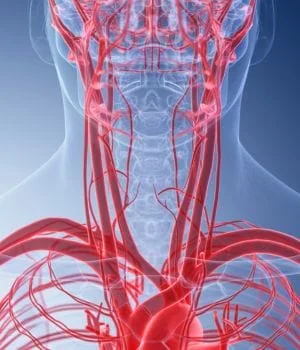
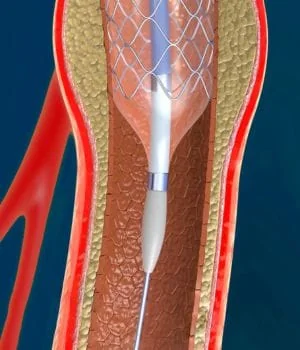
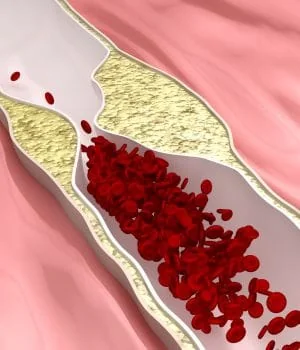
TCAR stands for transcarotid artery revascularization. It is a procedure to open a narrowed carotid artery in the neck with a stent, which is a tiny mesh tube that holds the artery open. It lowers the chance that plaque in that artery will cause a stroke.
Who is it for?
TCAR may fit you if you have a narrowed carotid artery and your care team believes a stent is a better choice for you than open surgery. It is often considered when other health conditions or neck anatomy make open surgery harder. Not everyone needs a procedure, and many people are treated with medicine and lifestyle changes alone.
See our page on carotid artery disease.
How does the procedure work?
- Preparation. You receive anesthesia or sedation, and your heart is monitored.
- Small cut. The surgeon makes a small cut just above the collarbone to reach the artery.
- Flow reversal. A tube and filter system briefly reverses blood flow in the carotid artery. Any loose pieces of plaque flow into a filter outside the body, away from the brain.
- Stent. A stent is placed across the narrowed area to hold it open.
- Restoring flow. Normal flow returns, and the cut is closed.
What does it feel like?
You are asleep or comfortably sedated. Afterward, the cut near the collarbone can be sore for a few days.
What can I expect afterward?
Many people stay a short time for monitoring and go home soon after. You will get written instructions for activity and wound care. You will take blood-thinning medicines for a period, and medicines for blood pressure and cholesterol. These protect the stent and your arteries. You will have follow-up ultrasound visits.
What are the risks?
TCAR is used for stroke prevention, but there are risks, including:
- Stroke or mini-stroke
- Bleeding or bruising at the cut
- Heart attack or heart rhythm problems
- The stent narrowing again later
- Injury to nerves near the cut
Dr. Rema Malik will go through these with you.
Call 911 for sudden face drooping, arm weakness, speech trouble, or vision loss. Do not wait.
How is it different from other options?
- Medicine and lifestyle are part of every plan.
- CEA removes the plaque through a larger cut in the neck. See our CEA page.
- TCAR uses a stent through a small cut and flow reversal to protect the brain.
What happens before you decide?
You start with a visit, an exam, and a carotid ultrasound. You leave knowing what your artery looks like, whether you need a procedure, and which type fits you best. You do not need a referral.
Conditions this treats
Frequently asked questions
Still have a question?
Our team answers the phone Monday to Friday, 8 AM to 5 PM.
Who is TCAR for?
People with a narrowed carotid artery who may do better with a stent than with open surgery. Dr. Rema Malik looks at your health, your artery, and your risk with each option.
How is TCAR different from CEA?
CEA opens the artery and removes plaque. TCAR places a stent and uses flow reversal to protect the brain. See our carotid endarterectomy page for that option.
Do I need to stay in the hospital?
Many people stay a short time for monitoring. Your care team will tell you what to expect.
What are the main risks?
Stroke, bleeding, heart problems, and a stent that narrows over time. Dr. Rema Malik will go through them with you before the procedure.
Do I need a referral?
No. You can call and schedule a visit directly.
Will insurance cover it?
Many plans cover TCAR when it is medically needed. Coverage differs by plan. We can explain what to expect after your visit.
Not ready to book? Get the monthly newsletter.
Plain-language vein and vascular guidance from Dr. Malik, once a month.
Ready to talk to a vascular surgeon?
Same-week appointments. No referral needed. Most insurance accepted.