
Leg Pain When Walking? Claudication Care in Sugar Land, TX
Cramping in your calf, thigh, or buttock that starts as you walk and eases when you stop has causes worth sorting out.
Quick answer
Leg pain that starts when you walk and eases when you stop is called claudication. It happens when leg muscles need more blood than they get. The most common vascular cause is peripheral artery disease (PAD), but spine, nerve, and joint problems can feel the same. A short exam and ultrasound can tell them apart.
- Pain that starts at a steady distance and eases within minutes of rest
- Ankle-brachial index and duplex ultrasound are often done the same day
- No referral needed, and same-week appointments are typically available
Facts to know
6.5 million
US adults aged 40 and older have PAD, a common cause of leg pain with walking. CDC
Up to 4 in 10
people with PAD have no leg pain, so pain is not the only sign. CDC
Over half
of people with a low ankle-brachial index have no symptoms or unusual ones. US Preventive Services Task Force
Class 1
is the top guideline rating for supervised exercise therapy for claudication. 2024 AHA/ACC PAD guideline, as summarized in Cleveland Clinic Journal of Medicine
Why do my legs hurt when I walk?
Leg pain that starts when you walk and eases when you stop is called claudication. It happens when leg muscles need more blood than they are getting. The most common vascular cause is peripheral artery disease (PAD), in which narrowed arteries limit blood flow to the legs.
Other conditions can look the same. A pinched nerve in the lower spine, arthritis in the hip or knee, and muscle problems can also cause pain when you walk. This page explains how to tell the difference, and when to be seen.
What does claudication feel like?
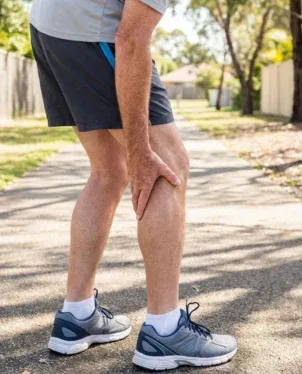
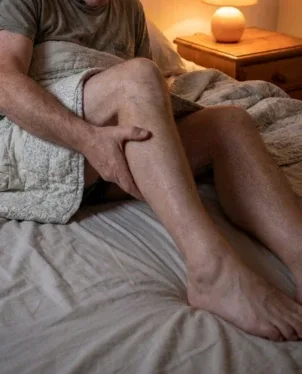
People describe it in different ways: cramping, aching, burning, or a heavy, tired feeling. It is most often in the calf, but it can be in the thigh, hip, or buttock. The pattern is the clue:
- It starts after a certain amount of walking.
- It eases within a few minutes of standing still.
- It returns after about the same distance when you start walking again.
- It may come on sooner when you walk uphill or faster.
What else can cause leg pain when walking?
A few common causes, in plain terms:
| Cause | What it often feels like |
|---|---|
| Narrowed leg arteries (PAD) | Cramping in the calf, thigh, or buttock that comes at a steady distance and eases quickly with rest |
| Pinched nerve or narrowing of the spine | Pain, numbness, or weakness that may ease when you sit or lean forward |
| Arthritis in the hip or knee | Joint pain that is worse with the first steps or after activity |
| Vein problems | Heaviness, aching, or swelling that is worse by evening |
| Muscle strain | Pain that follows a specific activity and settles with rest |
This table is a guide, not a diagnosis. Many people have more than one problem, which is why testing matters.
Why does it happen?
When you walk, your leg muscles need more blood. Healthy arteries open up to deliver it. When plaque has narrowed the arteries, the supply cannot keep up, and the muscle aches until you rest. The plaque builds slowly over years. Smoking, diabetes, high blood pressure, high cholesterol, age, and family history raise the risk. Pain from the spine or a joint has a different cause, which is why the pattern and tests matter.
Why it is worth checking
If the cause is PAD, treating it can improve how far you can walk, and it can lower the risk of heart attack and stroke, since the same artery disease often affects the heart and brain. If the cause is not PAD, you still get an answer, and a referral that fits your problem.
When should I see a vascular surgeon?
Make an appointment if:
- leg pain with walking limits what you do,
- it is getting worse,
- your foot or leg feels cold or looks pale, or
- you have a sore that is not healing.
The risk is higher if you smoke or used to smoke, or if you have diabetes, high blood pressure, or high cholesterol. You do not need a referral.
Call 911 if a leg or foot suddenly turns cold, pale, numb, or very painful, or if you cannot move it. Also call 911 for chest pain or sudden trouble speaking.
How is leg pain from PAD treated?
When tests point to PAD, the plan depends on how much it limits you.
Walking and lifestyle. A structured walking program, often supervised, is a top-rated first step. Stopping smoking and controlling blood sugar, blood pressure, and cholesterol also help.
Medication. Medicines can lower the risk of heart attack and stroke and help protect your arteries.
Angioplasty and stenting. When a blockage still limits your life despite those steps, a catheter-based procedure can open the artery. Read more on our angioplasty and stenting page.
If the tests point away from your arteries, we will tell you and suggest the right next step.
What if I do not, or cannot, get treated?
If the cause is PAD, leaving it alone may let it progress, with shorter walking distances and, over time, a higher risk of sores and limb problems. If the cause is your spine or a joint, delay may still leave you in pain and unsure why.
Some people cannot have a procedure, or choose not to. In that case, supervised or home walking, medicine, not smoking, good foot care, and regular checks still help. You can reconsider treatment at any time.
What can I expect after treatment?
With a walking program and medicine, people often notice gradual gains over weeks to months. After a procedure to open an artery, many go home the same day or the next, and walking often improves in the following weeks. Results differ from person to person, and treated arteries can narrow again, so follow-up checks are planned. Call us if a leg turns cold, pale, or numb.
Myths and facts
| Myth | Fact |
|---|---|
| Leg pain on walking is just getting older. | It can be treatable artery disease. A test shows whether it is. |
| I should rest, not walk. | Regular, planned walking often helps. Get checked first so the plan is safe. |
| No pain means healthy arteries. | Up to 4 in 10 people with PAD have no leg pain. |
| A normal pulse rules out PAD. | A pulse can feel fine while blood flow is low. An ankle-brachial index and ultrasound are more reliable. |
| If it eases with rest, it is not serious. | Easing with rest is the classic pattern of claudication, and it deserves a look. |
Does insurance cover this?
Evaluation of leg pain, including an ankle-brachial index and ultrasound, is medical care, and many plans cover it. Coverage differs by plan. After your visit, our team can explain what is likely to be covered and what is not.
What happens at the first visit?
You talk with Dr. Rema Malik about when the pain starts, where it is, and what eases it. She examines your legs and feet and checks your pulses. Tests that show blood flow, an ankle-brachial index and on-site duplex ultrasound, are often done at the clinic the same day. You leave knowing whether your arteries are involved and what comes next.
If the tests point to a problem outside your arteries, we will tell you, and suggest the right next step. If PAD is the cause, read more about peripheral artery disease and its treatments. Use the form at the bottom of this page, or call us.
What happens if leg pain with walking is not checked?
If the cause is PAD, it can progress. These are the steps to watch for.
Pain after a steady distance
Cramping starts at a predictable point and eases with rest.
Shorter distances
The pain comes sooner, and you stop more often or avoid walks.
Pain at rest or at night
Foot or toe pain that eases when you hang the leg down. A reason to be seen soon.
Sores or tissue loss
A wound that will not heal, or dark skin. The limb may be at risk.
If the pain is from your spine, nerves, or a joint, you may never see these steps. A test tells you which it is. A leg that suddenly turns cold, pale, or numb is an emergency. Call 911.
Signs you may have it
Pain that starts as you walk
Cramping or tiredness in the calf, thigh, or buttock after a steady distance.
Pain that eases with rest
It fades within minutes of standing still, and returns at about the same distance.
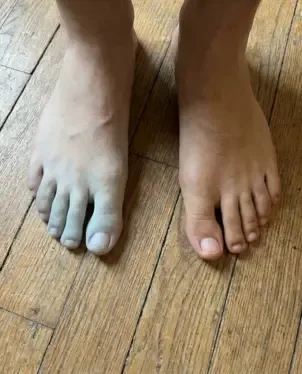
A cold or pale foot
One foot colder than the other, or skin that looks pale or shiny.
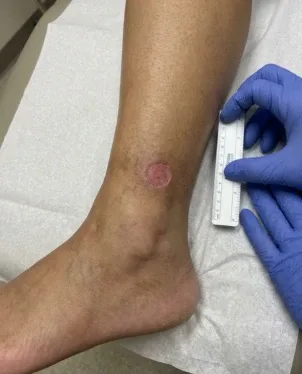
A sore that heals slowly
A foot or leg sore is a reason to be seen soon.
- Cramping, aching, or tiredness in the calf, thigh, or buttock when you walk
- Pain that eases within minutes of resting
- Pain that comes back at about the same distance each time
- A foot or leg that feels cold, or skin that looks pale or shiny
- Pain in the foot or toes at night that eases when you hang the leg down (a reason to be seen soon)
How we diagnose it
- A history of when the pain starts, where it is, and what relieves it
- An exam of your legs, feet, and pulses
- Ankle-brachial index and on-site duplex ultrasound to check blood flow
- Referral for spine, nerve, or joint evaluation if the tests point away from arteries
- No referral needed. Same-week appointments are typically available
Treatments in detail
Related conditions
Sources and further reading
These sources support the figures on this page. Your own numbers can differ, and only an exam and an ultrasound can tell you where you stand.
- Peripheral Arterial Disease, CDC
- Peripheral Artery Disease and Cardiovascular Disease: Screening and Risk Assessment With the Ankle-Brachial Index, USPSTF
- Peripheral artery disease: Putting the updated 2024 AHA/ACC guideline into practice, Cleveland Clinic Journal of Medicine
- Optimal Exercise Programs for Patients With Peripheral Artery Disease, American Heart Association Scientific Statement
Frequently asked questions
Still have a question?
Our team answers the phone Monday to Friday, 8 AM to 5 PM.
Is leg pain when walking always peripheral artery disease?
No. Narrowed leg arteries (PAD) are one common cause. Spine, nerve, joint, and muscle problems can feel similar. An exam and ultrasound help tell them apart.
What does claudication feel like?
People describe cramping, aching, burning, or tiredness in the calf, thigh, or buttock that starts after a certain amount of walking and eases within a few minutes of rest.
How can I tell artery pain from back or nerve pain?
Artery pain usually shows up at a predictable distance and eases quickly when you stand still. Pain from a pinched nerve in the back may ease when you sit or lean forward. Only an exam and tests can tell for sure.
Should I just walk through the pain?
Supervised walking programs help many people with claudication, but you should be evaluated first so the cause is known and the plan is safe.
What tests will I have?
An exam of your legs and pulses, an ankle-brachial index that compares blood pressure at the ankle and arm, and a duplex ultrasound that shows blood flow. These are done at the clinic, often the same day.
Can a normal test rule out a problem?
Not always. Some people have stiff arteries that can make the ankle-brachial index read falsely normal. Dr. Rema Malik looks at the whole picture, including your symptoms and the ultrasound.
Do I need a referral?
No. You can call and schedule a visit directly.
Not ready to book? Get the monthly newsletter.
Plain-language vein and vascular guidance from Dr. Malik, once a month.
Ready to talk to Dr. Rema Malik?
Tell us how to reach you. A team member calls to find a time that works. No referral needed.
- Same-week appointments are typically available
- On-site ultrasound, so you can leave with answers
- Most insurance accepted. Our team checks coverage first
Request an appointment
Takes about a minute. We call you back.