Aortic Aneurysm Treatment in Sugar Land, TX
An aortic aneurysm is a bulge in the body's largest artery. It often causes no symptoms, so it is usually found by ultrasound. Here is how it is watched and treated.
Quick answer
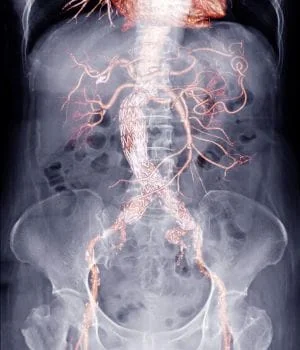
An aortic aneurysm is a weak spot in the wall of the aorta, the body's largest artery, that bulges outward. Most form in the belly and are called abdominal aortic aneurysms (AAA). They usually cause no symptoms, so an ultrasound is how they are found. Small ones are watched with scans. Large or fast-growing ones are usually repaired, because a burst aneurysm is a life-threatening emergency.
- Usually silent, found by an ultrasound that uses no needles and no radiation
- Small aneurysms are watched with regular scans, large ones are usually repaired
- No referral needed. Sudden severe belly or back pain is a 911 emergency
Facts to know
Grade B
US Preventive Services Task Force rating for a one-time ultrasound in men aged 65 to 75 who have ever smoked. USPSTF recommendation, December 2019
1.2–3.3%
of men older than 60 had an AAA in population-based studies. USPSTF recommendation statement, 2019
Up to 81%
is the risk of death when an AAA ruptures. USPSTF recommendation statement, 2019
1.3% vs 7.6%
AAA in women compared with men in a large screening trial. Chichester trial, cited in the USPSTF statement
What is an aortic aneurysm?
The aorta is the largest artery in your body. It carries blood from your heart down through your chest and belly. An aneurysm is a place where the wall of the artery has weakened and bulged outward, like a weak spot on a tire. Most aortic aneurysms form in the belly and are called abdominal aortic aneurysms, or AAAs.
Why does it happen?
The aortic wall weakens over time. Several things raise the chance:
- Smoking. It is the biggest risk you can change.
- Age. Aneurysms are found mostly in older adults.
- Sex. They are found more often in men.
- High blood pressure. It puts more strain on the artery wall.
- Family history. A close relative with an aneurysm raises your risk.
- Hardening of the arteries. Fatty build-up can damage the wall.
You cannot change your age or your family. You can stop smoking and keep your blood pressure under control.
What are the signs?
Most aneurysms cause no signs. Some people feel a deep, steady ache in the belly or back, or a pulsing near the belly button. Sudden, severe pain with dizziness or fainting is an emergency. Call 911.
Who is at risk?
The risk goes up with age and is higher in men. Smoking is the biggest risk you can change. High blood pressure and a family history of aneurysms also raise the risk.
How is it found?
Because there are usually no signs, an aneurysm is often found by chance, on an ultrasound or CT scan done for another reason. An abdominal ultrasound is the usual test. It is quick, uses no needles, and uses no radiation. If an aneurysm is found, a CT scan of the arteries shows its size and shape.
How is it treated?
The plan depends on the size of the aneurysm and how fast it is growing.
- Watching it. Small aneurysms are checked with regular scans. You control your blood pressure, stop smoking, and take any medicine your doctor advises.
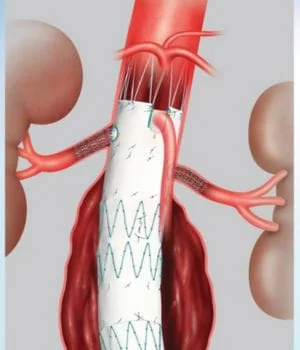
- Repairing it. When the aneurysm is large, growing, or causing symptoms, repair is usually advised. Repair can be done with endovascular aneurysm repair (EVAR), where a stent graft is placed through small openings in the groin, or with open surgery. Dr. Rema Malik, a vascular surgeon, performs these repairs and will explain which one suits your anatomy.
Not every aneurysm can be repaired with EVAR. A scan shows whether the shape of your aorta allows it.
What if I do not, or cannot, get treated?
A small aneurysm often needs no repair. Watching it with scans is the plan, and that is a good plan. The risk is skipping the scans. An aneurysm that grows without being checked can tear or burst, and a burst aneurysm is life-threatening.
Some people cannot have a repair, or choose not to. Other health problems can make surgery too risky. Not every aorta has a shape that suits EVAR. If repair is not possible, Dr. Rema Malik will talk with you about:
- keeping your blood pressure under control,
- stopping smoking,
- regular scans to watch for growth,
- knowing the emergency signs, and
- what to do and whom to call if they appear.
You can reconsider repair at any time. If the aneurysm grows or symptoms start, the plan can change.
What are the risks?
Any repair has risks, including bleeding, infection, kidney injury from the contrast dye, and problems with the graft over time. People who have EVAR need follow-up scans for years to make sure the graft is working. Dr. Rema Malik will review the risks and benefits with you.
What can I expect after treatment?
After EVAR, many people stay in the hospital a short time, and your care team will tell you when you can return to normal activity. After open surgery, recovery is longer. In both cases, you will have follow-up visits and scans. You will get written instructions on activity, medicine, and warning signs to watch for. Call us or go to an emergency room for new belly, back, or leg pain, fever, or a cold or numb leg.
Myths and facts
| Myth | Fact |
|---|---|
| I would feel it if I had an aneurysm. | Most people feel nothing. A scan is how it is found. |
| Every aneurysm needs surgery. | Small ones are usually watched with regular scans. |
| An ultrasound is risky. | It uses no needles and no radiation. |
| Only men get aortic aneurysms. | They are more common in men, but women can have them too. Ask your doctor about your own risk. |
| Once it is found, nothing can be done. | Many options exist, from watching to repair. |
Does insurance cover care for an aortic aneurysm?
Many plans cover imaging and repair when they are medically needed, and some cover a one-time screening ultrasound for people at higher risk. Coverage differs by plan. Our team can explain what to expect for your visit.
What happens at the first visit?
You talk with Dr. Rema Malik about your health, your risk factors, and any scans you have had. Bring a copy of any ultrasound or CT report. She reviews your scans and may order an ultrasound or a CT scan. You leave knowing the size of the aneurysm, whether it needs watching or repair, and what the next step is. You do not need a referral.
Call us at the number on this page to request a visit. Call 911 for sudden, severe pain.
What happens if an aortic aneurysm is not treated?
Most aneurysms grow slowly and quietly. These are the steps they can follow, so you know why scans matter.
Small and silent
A small bulge with no symptoms. Found by chance or by screening. Checked with regular scans.
Slowly growing
Scans show the width increasing. Blood pressure control and not smoking matter most here.
Large or fast-growing
Repair is usually advised. You may feel a deep ache in the belly, side, or back.
Tear or rupture
Sudden, severe pain with dizziness or fainting. A life-threatening emergency. Call 911.
Most people never reach the last step, because scans find the problem first. Size and growth rate guide the plan.
Signs you may have it
- Often, no symptoms at all
- A steady, deep ache in the belly, side, or back
- A pulsing feeling near the belly button
- Found by chance on an ultrasound or CT scan done for another reason
How we diagnose it
- A review of your risk factors, such as age, smoking, high blood pressure, and family history
- An abdominal ultrasound, which measures the aorta without needles or radiation
- CT angiography when the size or shape needs a closer look
- Repeat scans over time to watch for growth
Treatments in detail
Related conditions
Sources and further reading
These sources support the figures on this page. Your own numbers can differ, and only an exam and an ultrasound can tell you where you stand.
- Abdominal Aortic Aneurysm: Screening, U.S. Preventive Services Task Force recommendation (2019)
- Screening for Abdominal Aortic Aneurysm: Recommendation Statement (American Family Physician)
- The Society for Vascular Surgery practice guidelines on the care of patients with an abdominal aortic aneurysm (PubMed)
Frequently asked questions
Still have a question?
Our team answers the phone Monday to Friday, 8 AM to 5 PM.
What is an aortic aneurysm?
The aorta is the main artery that carries blood from your heart to the rest of your body. An aneurysm is a weak spot where the wall bulges outward. Most are in the part of the aorta in the belly, called an abdominal aortic aneurysm (AAA).
Why does it matter?
A large aneurysm can tear or burst, which is a life-threatening emergency. Finding one early lets your doctor watch it and treat it before that happens.
Who should be screened?
Guidelines suggest a one-time screening ultrasound for some people, such as men aged 65 to 75 who have ever smoked. Ask your doctor whether screening makes sense for you, especially if a close relative has had an aneurysm.
Does every aneurysm need surgery?
No. Small aneurysms are usually watched with regular scans, along with blood pressure control and not smoking. Repair is usually considered when the aneurysm is large, growing quickly, or causing symptoms.
What is EVAR?
Endovascular aneurysm repair places a stent graft inside the aorta through small openings in the groin. The graft relines the aorta so blood flows through it instead of pushing on the weak wall. It avoids a large open incision for many patients.
Can I feel an aortic aneurysm?
Usually not. Most cause no symptoms at all. Some people feel a deep ache or a pulse near the belly button. A scan is the only way to know.
What can I do to lower my risk?
Do not smoke, and keep your blood pressure under control. Take any medicine your doctor advises. Tell your doctor if a close relative has had an aneurysm.
Do I need a referral?
No referral is needed to book a visit. If you have sudden severe pain, call 911 instead.
Not ready to book? Get the monthly newsletter.
Plain-language vein and vascular guidance from Dr. Malik, once a month.
Ready to talk to Dr. Rema Malik?
Tell us how to reach you. A team member calls to find a time that works. No referral needed.
- Same-week appointments are typically available
- On-site ultrasound, so you can leave with answers
- Most insurance accepted. Our team checks coverage first
Request an appointment
Takes about a minute. We call you back.