
Venous Leg Ulcer Treatment in Sugar Land, TX
A leg sore that will not heal often comes from leaking veins. Treating the vein is how many ulcers stay healed.
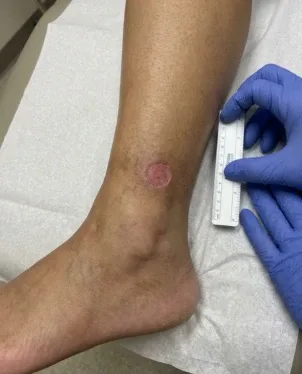
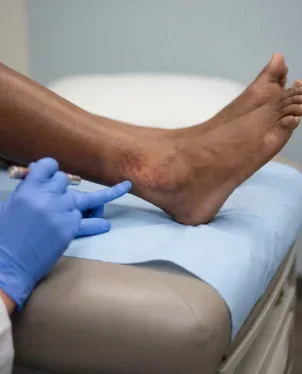
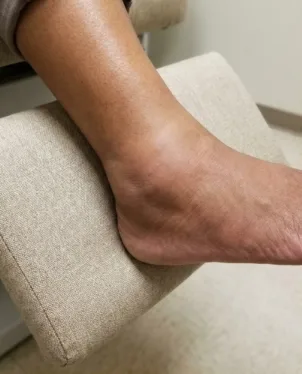
Quick answer
A venous leg ulcer is an open sore on the lower leg, usually near the ankle, caused by high pressure in leaking veins. It heals slowly and often comes back unless the vein problem is treated. Care combines wound care, compression, and closing the leaking vein when ultrasound shows it.
- Usually found near the inner ankle
- Compression and wound care help it heal
- Treating the leaking vein lowers the chance it returns
Facts to know
60–80%
of chronic leg ulcers are caused by vein disease. Published reviews of chronic venous disease
1–2%
of adults have a venous leg ulcer, rising to about 3% after age 65. StatPearls clinical summary
21% vs 46%
of ulcers came back by six months with compression vs without it, in one trial of 153 people. Cochrane review of compression for ulcer recurrence
What is a venous leg ulcer?
A venous leg ulcer is an open sore on the lower leg, most often near the inner ankle. It comes from long-standing high pressure in the leg veins, which damages the skin until it breaks down. It is the most advanced stage of chronic venous insufficiency.
Why does it happen?
When valves in the leg veins leak, blood pools in the lower leg, and the pressure rises. Over months or years, this can:
- swell the leg,
- darken and harden the skin near the ankle, and
- cause the skin to open into a sore, sometimes after a small knock or scratch.
Risk is higher with varicose veins, a past leg blood clot, age, extra weight, long hours on your feet, and a past leg injury.
Is it a vein sore or an artery sore?
The difference matters because the treatments differ. Vein ulcers sit low on the leg, near the ankle, with swelling and skin changes around them. Sores from poor artery flow, or from diabetes, are more often on the toes, heel, or foot, and can hurt more when the leg is raised. Some people have both. We check pulses and blood flow before starting compression.
When should I see a vascular surgeon?
Make an appointment if:
- a leg sore has not healed in two to four weeks,
- a sore has healed and opened again,
- you have ankle swelling and skin changes, or
- you have varicose veins and any sore.
You do not need a referral.
Go to an emergency room today for spreading redness, fever, a bad smell, or severe pain. Call 911 for chest pain or trouble breathing.
How is a venous ulcer treated?
Care has three parts.
Wound care. The sore is cleaned and dressed, and we watch for infection.
Compression therapy. Compression lowers pressure in the leg veins and helps the ulcer heal. It is used only after arterial blood flow is checked.
Treating the leaking vein. An ultrasound finds the source. Closing it with a procedure such as radiofrequency ablation can lower the pressure and the chance that the ulcer returns. Dr. Rema Malik chooses the approach after your ultrasound.
See also our page on non-healing leg wounds.
What if I do not, or cannot, get treated?
A venous ulcer rarely heals well on its own. It can stay open for months, become infected, and keep coming back.
Some people cannot have compression right away or a vein procedure. Examples include:
- Poor blood flow in the leg arteries. Compression may not be safe. Arteries are checked first.
- An active infection. The infection is treated first.
- A recent blood clot. The clot is treated first.
- Other health conditions. Dr. Rema Malik will weigh them with you.
If treatment is not possible, keep the wound clean and dressed, raise your legs when you sit, walk daily, and call us for any sign of infection. You can reconsider treatment at any time.
What can I expect after treatment?
Healing takes time, often weeks to months, and depends on the size of the sore and your overall health. Your care team gives written wound and compression instructions. After a vein procedure you can usually walk right away, with mild bruising or tightness along the treated vein.
Myths and facts
| Myth | Fact |
|---|---|
| A leg sore needs rest and a bandage only. | Without treating the vein pressure, many sores return. |
| Keep the sore dry and uncovered. | Sores usually heal better when kept clean and dressed. |
| Compression is dangerous for any sore. | It is a core treatment, once artery flow is checked. |
| Leg sores are only a skin problem. | Many come from the veins or arteries underneath. |
Does insurance cover ulcer care?
Many plans cover wound care, compression, and vein treatment when a sore and an ultrasound show vein disease. Rules differ by plan. After your visit, our team can explain what is likely to be covered.
What happens at the first visit?
You talk with Dr. Rema Malik about your sore, how long you have had it, and what you have tried. She examines your leg, checks pulses and blood flow, and an ultrasound can usually be done at the clinic the same day. You leave with a plan. Use the form at the bottom of this page, or call us.
What happens if a venous ulcer is not treated?
A sore from the veins rarely heals well on its own. These are the steps it can follow.
A sore that stays open
It heals slowly, or heals and opens again.
Pain and drainage
Aching, fluid leaking from the sore, and swelling around it.
Infection
Redness, warmth, spreading pain, or fever. Needs prompt care.
A wound that grows
Larger and deeper sores, and more time off your feet and out of daily life.
Not every leg sore is from the veins. Artery disease and diabetes cause sores too, and they need different care. We check blood flow in both veins and arteries first.
Signs you may have it
A sore that is slow to heal
A shallow open sore near the ankle, often with uneven edges.
Dark, itchy, tight skin
Skin around the ankle darkens, dries, or feels leathery before a sore forms.
Swollen ankle
Swelling that builds through the day and returns daily.
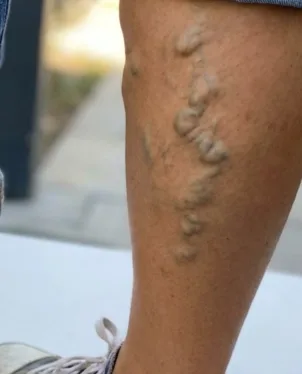
Visible varicose veins
Bulging veins near the sore point to leaking valves.
- An open sore on the lower leg, most often near the ankle
- A sore that has not healed in several weeks
- Swelling, heaviness, or aching in the leg
- Darkened, itchy, or tight skin around the sore
- Fluid leaking from the sore
How we diagnose it
- A leg and wound exam
- Ankle-brachial index or pulse checks, to rule out artery disease before compression
- On-site duplex ultrasound to find leaking veins
- No referral needed. Same-week appointments are typically available
Treatments in detail
Related conditions
Sources and further reading
These sources support the figures on this page. Your own numbers can differ, and only an exam and an ultrasound can tell you where you stand.
Frequently asked questions
Still have a question?
Our team answers the phone Monday to Friday, 8 AM to 5 PM.
How do I know if my leg sore is from the veins?
Vein ulcers are usually near the inner ankle, with swelling and skin changes around them. Artery and diabetic sores often sit on the toes, heel, or foot and are more painful when the leg is raised. An exam and tests show which it is.
Will the ulcer come back?
It can. In one trial, ulcers returned much less often with compression than without. Closing a leaking vein can lower the chance further. Dr. Rema Malik will discuss your plan.
Can I wear compression with an open sore?
Often yes, but only after your arterial blood flow is checked, because compression is not safe with poor leg circulation. Dr. Rema Malik will tell you.
When does a leg sore need urgent care?
Go to an emergency room today for spreading redness, fever, a bad smell, or severe pain. Do not wait.
Do I need a referral?
No. You can call and schedule a visit directly.
Not ready to book? Get the monthly newsletter.
Plain-language vein and vascular guidance from Dr. Malik, once a month.
Ready to talk to Dr. Rema Malik?
Tell us how to reach you. A team member calls to find a time that works. No referral needed.
- Same-week appointments are typically available
- On-site ultrasound, so you can leave with answers
- Most insurance accepted. Our team checks coverage first
Request an appointment
Takes about a minute. We call you back.