
Dialysis Access in Sugar Land, TX
A fistula or graft gives dialysis a safe way to reach your blood. A vascular surgeon creates it, and also treats it when it narrows, clots, or stops working well.
Quick answer
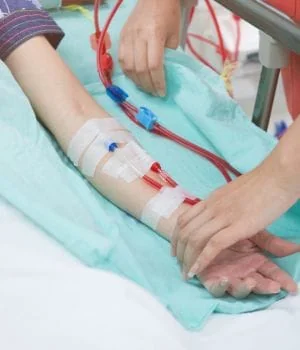
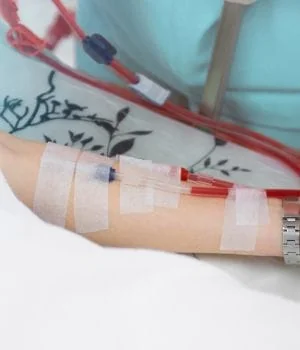
Dialysis access is the connection that lets a dialysis machine reach your blood. Most people need an arteriovenous (AV) fistula, which joins your own artery to your own vein, or an AV graft, a soft tube between them. A vascular surgeon creates it in a small operation, usually in the arm, and treats it later if it narrows, clots, or stops working well.
- A fistula needs weeks to months to mature, a graft can often be used sooner
- Narrowing and clots can often be treated without a large operation
- No referral needed. Your kidney doctor and dialysis team stay involved
Facts to know
82 days
median time to first successful needle use for a new fistula in the US, compared with 29 days for a graft. Allon, Clin J Am Soc Nephrol, 2019
27–58%
of new fistulas need extra help to mature. Allon, Clin J Am Soc Nephrol, 2019
0.7% vs 9.7%
yearly access infection rate once in use, fistula compared with graft. Allon, Clin J Am Soc Nephrol, 2019
1 in 3 or more
of new fistulas fail to mature in recent studies. Allon, citing DOPPS data
What is dialysis access?
Dialysis cleans your blood when your kidneys can no longer do it. To do that, the dialysis machine needs a steady, reliable way to reach your blood. That connection is called dialysis access. It is built in a small operation, usually in the arm, and it is used with needles at each treatment.
What types of access are there?
- Arteriovenous (AV) fistula. A surgeon joins one of your own arteries to one of your own veins. Blood flows through the vein under more pressure, and the vein slowly gets larger and stronger. A fistula usually lasts longer than other types and has a lower risk of infection, but it takes time to mature.
- AV graft. A soft tube is placed between an artery and a vein. A graft can often be used sooner than a fistula, but it may need more follow-up procedures over time.
- Catheter. A tube placed in a large vein, usually in the neck or chest. A catheter is often used as a short-term bridge while a fistula or graft heals.
Which one is best depends on your veins, your arteries, your health, and how soon you need dialysis.
Why do access problems happen?
An access carries much more blood, and under more pressure, than a normal vein, and it is used with needles again and again. Over time that can lead to trouble:
- Narrowing. The vein wall can thicken and narrow where blood flows hard.
- Clots. Slow flow through a narrowed spot lets a clot form.
- Infection. Needle sites and catheters let germs in.
- A fistula that does not mature. Some veins do not grow large enough to use. This is common and is not caused by anything you did.
- Reduced blood flow to the hand. In some arms, the access takes blood that the hand needs.
Small veins, scarred veins from past needle sticks or IV lines, diabetes, and other health conditions can make these problems more likely.
How is the right access chosen?
Before surgery, an ultrasound map of the veins and arteries in your arms shows which ones are large and healthy enough to use. Dr. Rema Malik reviews your kidney care plan, your overall health, and which arm you use most. You decide together.
What happens during surgery?
Access surgery is usually done as an outpatient procedure. The type of anesthesia depends on the operation and your health, and ranges from numbing medicine in the arm to general anesthesia. Dr. Rema Malik will explain what to expect for you. After surgery, you will have instructions about keeping the arm clean and protected.
How do I take care of a new access?
- Keep the area clean and watch the incision.
- Check the buzz, or thrill, over the access every day, as your care team teaches you.
- Do not carry heavy things, wear tight sleeves, or sleep on the arm with the access.
- Tell your dialysis team right away if the thrill goes away, or if you notice swelling, pain, redness, or drainage.
When should I see a vascular surgeon?
See a surgeon if your kidney doctor says you will need dialysis soon, if you are on dialysis through a catheter and want a fistula or graft, or if your access is hard to use, swollen, painful, or has stopped working well. You do not need a referral.
Call 911 or go to an emergency room for heavy bleeding from the access (press firmly on the site first), a cold, pale, or numb hand, sudden severe arm pain, or fever with redness at the access.
What problems can happen with an access?
Accesses can narrow or clot, which makes dialysis harder. They can get infected. In some people, an access takes blood flow from the hand and makes it cold, painful, or numb. Many of these problems can be treated. Narrowing is often opened with a balloon, a procedure like angioplasty and stenting, and clots can often be cleared. Finding a problem early gives you more options.
What if the access is not treated, or cannot be fixed?
A narrowing that is left alone can lead to a clot, and a clotted access cannot be used for dialysis. Without a working access, dialysis has to go through a catheter, and catheters carry a higher risk of infection. An infected access can be serious and needs prompt care.
Sometimes an access cannot be fixed, or a new one cannot be placed in the same arm. Reasons can include veins that are too small or scarred, or poor blood flow in the arteries. In that case, Dr. Rema Malik will talk with you and your kidney doctor about other options, such as a different arm, a different type of access, or a catheter while a plan is made.
What are the risks of access surgery?
Risks include bleeding, infection, a clot, an access that does not mature, and reduced blood flow to the hand. Some people need a second procedure to help a fistula mature. Dr. Rema Malik will go over the risks and your options with you.
What can I expect after treatment?
Most people go home the same day after access surgery. Some swelling and bruising near the incision is common. Your care team will tell you when the arm can be used and when to return for a check. A fistula needs weeks to months to mature, and an ultrasound shows when it is ready. After a balloon procedure to open a narrowing, you can often return to your normal dialysis schedule. Follow your care team’s instructions, and report any change in the buzz.
Myths and facts
| Myth | Fact |
|---|---|
| A catheter is as good as a fistula. | A catheter is often a short-term bridge, and it carries a higher risk of infection. |
| If my fistula does not work, I have no options. | Many can be helped with another procedure, or another access can be planned. |
| Blood draws and IVs in either arm do not matter. | Repeated sticks can scar veins you may need later. Ask which arm to protect. |
| A clotted access cannot be saved. | Clots can often be cleared, and early care gives more options. |
| Dialysis access is only for people already on dialysis. | Planning often starts before dialysis, when kidney disease is advancing. |
Does insurance cover dialysis access?
Dialysis access surgery and care for a failing access are medically needed services, and many plans cover them. Coverage differs by plan. Our team can explain what to expect for your visit. Your kidney doctor and dialysis team stay involved.
What happens at the first visit?
You talk with Dr. Rema Malik about your kidney care, your dialysis plan, and which arm you use most. She examines your arms and checks the access if you have one. An ultrasound may be done to map your veins or to check blood flow in an access. You leave knowing your options and the next step. Bring your dialysis schedule and any recent reports. You do not need a referral.
Call us at the number on this page to request a visit. Call 911 for heavy bleeding or a cold, pale, or numb hand.
What happens if a dialysis access is not cared for?
An access works best when problems are found early. These are the steps a failing access can follow, so you know what to report.
Harder to use
Needle placement takes more than one try. The buzz over the access feels weaker.
Narrowing
Blood flows more slowly. Swelling or long bleeding after dialysis. Often treatable with a balloon procedure.
A clot forms
The buzz stops. The access cannot be used. Needs prompt care, because clots are easier to clear early.
Back to a catheter
A catheter in the neck or chest is used meanwhile. It has a higher risk of infection than a fistula.
Call your dialysis team the same day the buzz changes or goes away. Heavy bleeding, a cold or numb hand, or fever with redness at the access is an emergency. Call 911.
Signs you may have it
- Kidney disease that is moving toward needing dialysis, or dialysis through a temporary catheter
- A fistula or graft in the arm that is hard to use, or that needs more than one attempt to place the needles
- Swelling, pain, or coolness in the arm or hand with the access
- Less feeling of a buzz or thrill over the access than before
- Long bleeding from the needle sites after dialysis
- Redness, warmth, or drainage near the access
How we diagnose it
- A review of your kidney care, your dialysis plan, and which arm you use most
- A vein mapping ultrasound before surgery, to find veins and arteries that suit an access
- Duplex ultrasound of an existing access to see blood flow and any narrowing
- A fistulogram, an X-ray test with contrast dye, when a narrowing needs a closer look
Treatments in detail
Related conditions
Sources and further reading
These sources support the figures on this page. Your own numbers can differ, and only an exam and an ultrasound can tell you where you stand.
Frequently asked questions
Still have a question?
Our team answers the phone Monday to Friday, 8 AM to 5 PM.
What is dialysis access?
It is the way dialysis reaches your blood. Most people need a fistula or a graft, which a surgeon places in the arm. Dialysis machines connect to it with needles at each treatment.
What is the difference between a fistula and a graft?
A fistula joins one of your own arteries to one of your own veins. Over weeks to months the vein enlarges and strengthens so it can be used for dialysis. A graft is a soft tube that joins an artery and a vein, and it can often be used sooner. Dr. Rema Malik will tell you which fits your veins and your health.
How long does a fistula take to be ready?
A fistula usually needs several weeks to a few months to mature before it can be used. An ultrasound shows when it is ready. Your dialysis team may use a temporary catheter in the meantime.
Why is it important to protect the veins in my arm?
Repeated needle sticks and IV lines can scar the veins you may need later for an access. If you have advanced kidney disease, ask your care team to avoid blood draws and IVs in the arm you plan to use. Ask your kidney doctor which arm to protect.
What problems can happen with an access?
An access can narrow, clot, get infected, or not mature well. Some arms have reduced blood flow to the hand after an access is made. Many problems can be treated, often with a minimally invasive procedure, so tell your dialysis team early if something changes.
Why did my fistula not work?
Some fistulas do not mature on their own, and this is not caused by anything you did. Many can be helped with a follow-up procedure. If one cannot, another access can often be planned.
What should I do if the buzz over my access stops?
Call your dialysis team and our office the same day. Do not wait for your next treatment. If the arm is cold, pale, or numb, or you have heavy bleeding, call 911.
Do I need a referral?
No referral is needed to book a visit with Dr. Rema Malik. Your kidney doctor and dialysis team stay involved in your care, and we coordinate with them.
Not ready to book? Get the monthly newsletter.
Plain-language vein and vascular guidance from Dr. Malik, once a month.
Ready to talk to Dr. Rema Malik?
Tell us how to reach you. A team member calls to find a time that works. No referral needed.
- Same-week appointments are typically available
- On-site ultrasound, so you can leave with answers
- Most insurance accepted. Our team checks coverage first
Request an appointment
Takes about a minute. We call you back.